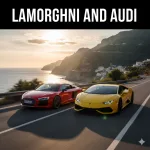
For most people, Lamborghini conjures images of speed and sharp angles, of excess. However, that wasn’t where the story began, and it’s not why the brand exists in the first place. The real question is not who created Lamborghini, but why someone would attempt to compete with the most legendary names in Italian car history. The short answer is Ferruccio Lamborghini.
For all automobile lovers, collectors, or individuals with dreams of experiencing the extreme, this blog shares the story of how Lamborghini evolved from tractor manufacturing to becoming a legend in the automotive world.
Whether the Miura or the Aventador, every Lamborghini is a fusion of genius and lifestyle, thrilling motorists from the coastline of California to the neon-lit roads of Las Vegas.
Who Created Lamborghini?
Lamborghini was established in 1963 by Ferruccio Lamborghini, an Italian industrialist whose name wasn’t known for racing or luxury cars.
Unlike manufacturers that were born on the race tracks, Lamborghini emerged from the post-war industry. Ferruccio constructed tractors from leftover military parts, then modified them until they were reliable, popular, and affordable. That success gave him financial freedom — but it also sharpened his expectations.
When something didn’t work correctly, he didn’t romanticize it. He fixed it.
That same mindset followed him into the world of sports cars. And, eventually, it’s what made him do something most people can only complain about: start all over again and build it his own way.
Who Was Ferruccio Lamborghini?
Don’t picture a silver-spoon aristocrat. Ferruccio was born in 1916 in Renazzo, a small rural village in Italy. It was a world where effort was more important than talent. Machines were tools, not passions.
He owned several Ferraris. He admired their speed, their reputation. But as a mechanic to his core, he found them frustrating. They were temperamental. Unnecessarily fussy. To him, they weren’t perfect—they were poorly finished.
That blend of confidence, deep technical knowledge, and blunt honesty was Ferruccio. He didn’t care about racing prestige or flattery. He cared about things being built right. And if they weren’t? He’d show you how it’s done.
That belief didn’t just shape a company—it shattered the supercar status quo.
Why Did Ferruccio Lamborghini Create Lamborghini?
Why does Lamborghini exist? It was not a conscious business plan. It was pure, unfiltered frustration. And Ferruccio Lamborghini was never one to walk away from a challenge.
Early 1960s. He’s driving his Ferraris. They’re fast, yes. But the ride is stiff. The cabin is noisy. The clutch keeps failing. He investigates. The engineer in him discovers the clutch is basically a tractor part—poorly adapted. He sees a simple fix.
The legend says he took his feedback to Enzo Ferrari. And was dismissed. “Stick to your tractors,” was the gist. That was the spark. Instead of arguing, Ferruccio chose revolution. Instead, he would create a grand tourer: luxurious, reliable, and crushingly powerful. A car to use and not a baby.
That decision was the cornerstone of everything that came after.
When Was Lamborghini Founded?
Its establishment was announced in 1963. However, the notion had been festering for years.
Automobili Lamborghini S.p.A. was founded and, for more than half a century, operated in Sant’Agata Bolognese, an Italian hamlet unblemished by a history of car making. He chose it deliberately. Close to his tractor factory, but far from the shadow of Maranello.
His goal was crystal clear from the outset: to create grand touring cars for real-world driving. Not race cars. They needed brutal power, searing speed, and—critically—everyday comfort. Lamborghini didn’t chase trophies. It chased a feeling. And by the mid-60s, this upstart was a force to be reckoned with.
The First Cars That Shaped Lamborghini
Lamborghini 350 GT (1964)
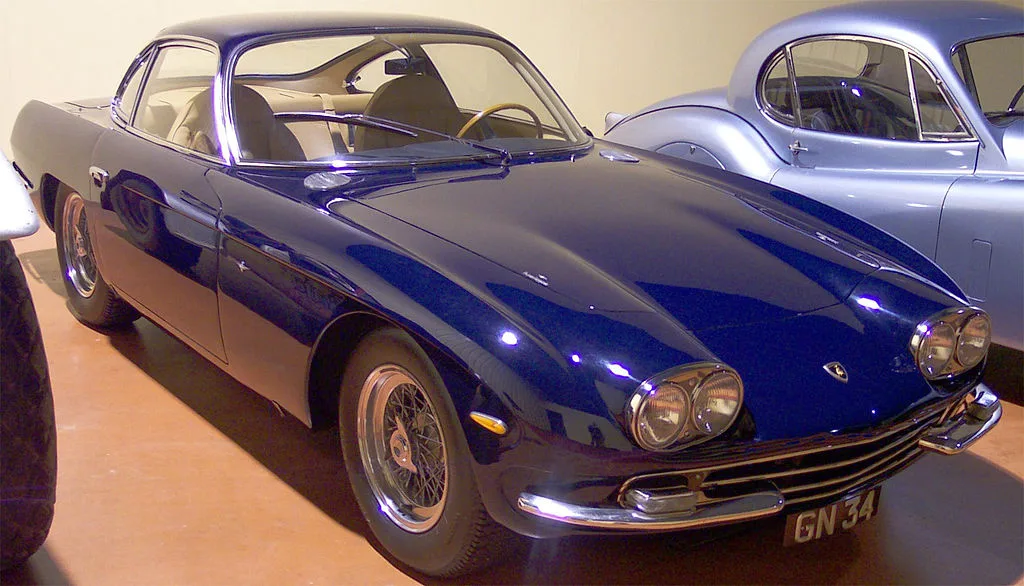
This was Ferruccio’s “proof of concept.” The 1964 350 GT silenced the skeptics who thought a tractor maker couldn’t craft a luxury supercar. What made it special wasn’t just the glorious V12. It was the experience. Ferruccio insisted on a smooth, comfortable ride. You could drive it across Europe without feeling battered. This car proved Lamborghini was more than a vendetta. It was a new standard.
Lamborghini Miura (1966)
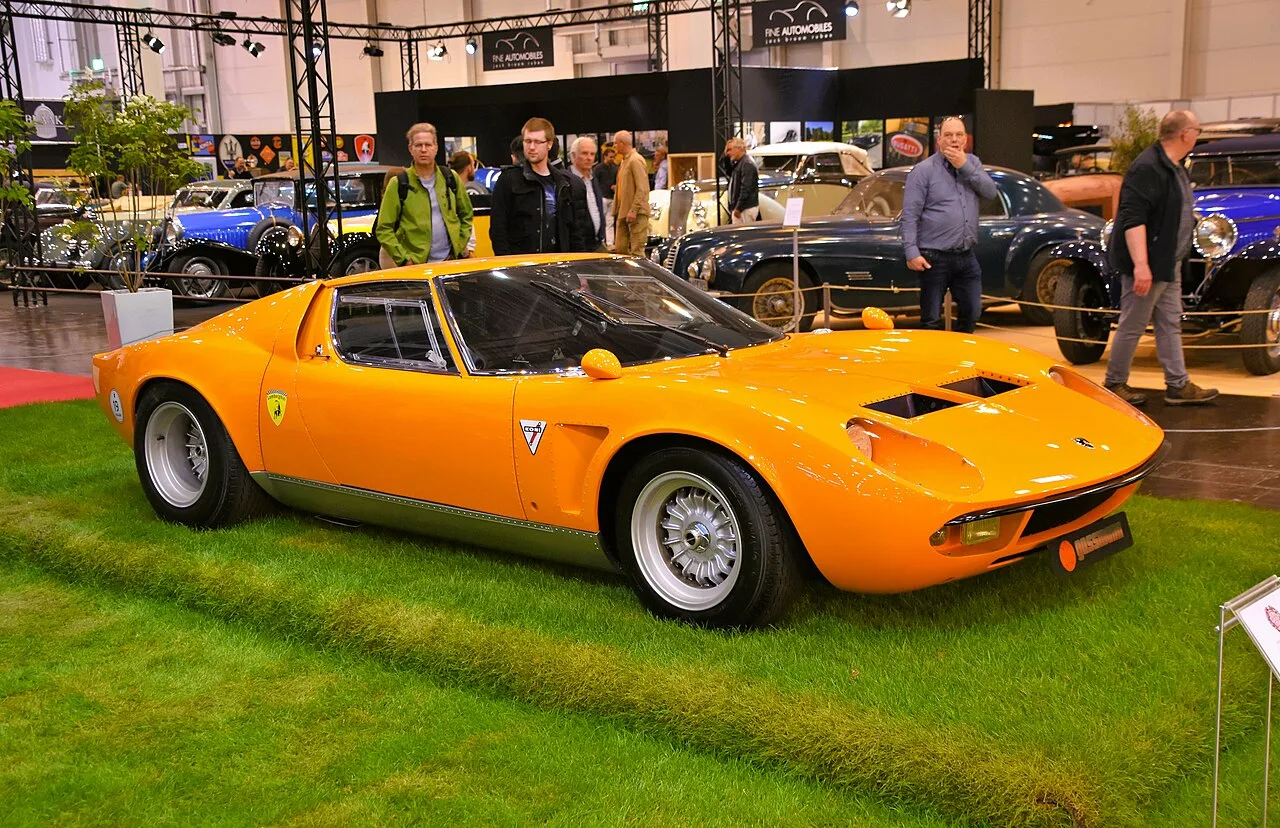
And then, two years later, they dropped a bomb. The Miura. It doesn’t seem right to call it a “car.” It was a seismic shift. It set the DNA.
- Mid-Engine Design: A radical new design that positioned the engine behind the driver for ideal balance.
- Styling That Screamed: Aggressive, low, and absolutely stunning. It looked like the future.
- Performance That Redefined Fast: For its era, it was otherworldly.
The Miura didn’t just sell. It transformed Lamborghini from newcomer to visionary icon.
Why Lamborghini Uses a Bull?
That iconic logo isn’t random. It’s deeply personal. Ferruccio was a Taurus. He admired strength, stubborn power, unyielding spirit—everything he wanted his cars to be. He was also fascinated by Spanish fighting bulls.
So the bull became the symbol. But they went further. Many models are named after famous bulls, cementing the identity:
- Miura: A legendary Spanish breed.
- Murciélago: A bull that survived 24 sword strikes.
- Aventador: A champion fighter.
- Huracán: Spanish for “hurricane,” but tied to bullfighting lore.
It was also a silent jab at Ferrari’s prancing horse. This wasn’t just about luxury. It was about raw, untamed power.
How Lamborghini Became a Global Supercar Icon
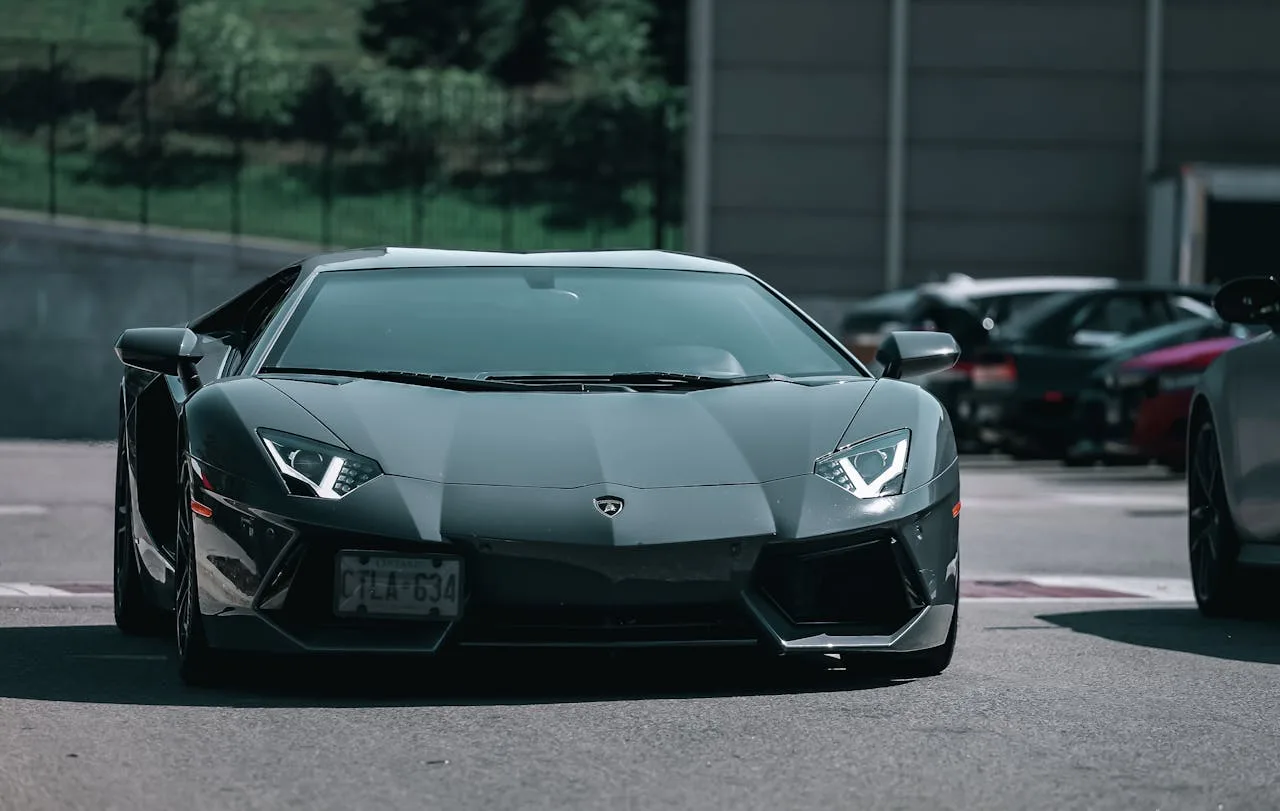
The path wasn’t always smooth. Oil crises, financial problems, and uncertainty over ownership marked the 1970s. The bull, however, was never broken in spirit.
The real game changer was 1998. Lamborghini was bought by Audi (a subsidiary of Volkswagen Group). This wasn’t a takeover to subdue the bull — it wanted to set it loose with proper ammunition. Audi brought state-of-the-art engineering and global muscle, and also did its best to protect Lamborghini’s wild heart.
The result? Modern icons:
- Aventador: A V12 masterpiece of design and violence.
- Huracán: Accessible insanity.
- Urus: A super-SUV that conquered new worlds.
Today, that silhouette, that roar, that badge—it’s a universal signal. A promise of passion, performance, and fearless ambition.
Live the Legacy with FYV Exotic Car Rental
Sliding behind the wheel of a Lamborghini isn’t a rental. It’s an immersion. You’re connecting to Ferruccio’s defiance, to decades of audacious innovation. When you press the accelerator, you’re not just moving—you’re channeling a story that began in Italian tractor fields.
Imagine it. The canyons of Los Angeles. The neon blaze of the Vegas Strip. The Pacific views of San Diego. A Lamborghini turns a drive into a core memory.
With FYV Exotic Car Rental, you claim that legacy. Every roar, every glance from the crowd, reminds you: you’re not just driving a car. You’re living a revolution.
Conclusion
As we wrap up our tribute to the Lamborghini blog, we’ve explored who created Lamborghini and why it has become an icon.
Ferruccio Lamborghini began his career in a manner typical of many wealthy individuals: by manufacturing tractors. However, his most innovative idea led him to supercars, transforming an entire industry. Every car — from the original 350 GT to today’s Revuelto—reflects a tale of audacious vision, exacting craftsmanship, and raw imagination.
This story is a reminder that innovation is rarely easy; it’s brought to life by wonder and the bravery and tenacity of digital tinkerers. Ferruccio’s imprimatur is not only rubber on the roads but also gum on the shoe of any car lover (and I’d wager even some non-car lovers) who has caught one’s infectious love for speed, design, and daring to dream.
Frequently Asked Questions
Was Ferruccio truly a tractor builder?
Absolutely. The first Lamborghini Trattori, established in 1948. He made highly successful tractors from war surplus, financing his complete automotive dream.
Where is every Lamborghini built?
Each and every one, from the first to now, comes off the line at Sant’Agata Bolognese, Italy. The small town has been its beating heart since ’63.
Who owns Lamborghini today?
Since 1998, it has been under the umbrella of the Volkswagen Group, with direction from Audi. This gave the bull stability and tech, without clipping its horns.
Why all the bull names?
Ferruccio, a Taurus, loved the bull’s fierce spirit. It started with the Miura and became tradition—a direct symbol of power and aggression.
Did Ferruccio and Enzo Ferrari ever make up?
By all accounts, no. That legendary rivalry burned until the end, fueling the myth of both brands. Some say the competition was the best thing that ever happened to supercar fans.